
Ocean Acoustics
Oasis: The Science Beneath the Surface
PRECISION ACOUSTICS. HANDS ON RESEARCH.
Empowering Our Maritime Intelligence
with World-Class Ocean Acoustics Sensing
Ocean Acoustical Services and Instrumentation Systems (OASIS), a subsidiary of ThayerMahan since 2020, is the scientific engine behind our advanced maritime sensing capabilities. Founded in 1990 by Phil Abbot and Chuck Gedney, and strengthened by the addition of Vince Premus in 2006, OASIS has spent decades as a pioneer at the forefront of ocean acoustics, physical oceanography, and at-sea technology demonstrations.
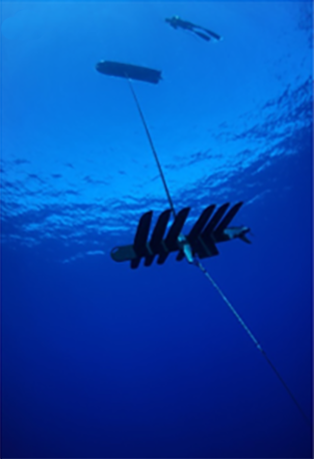

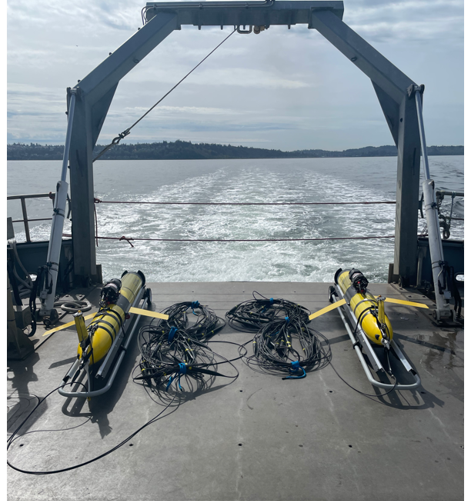

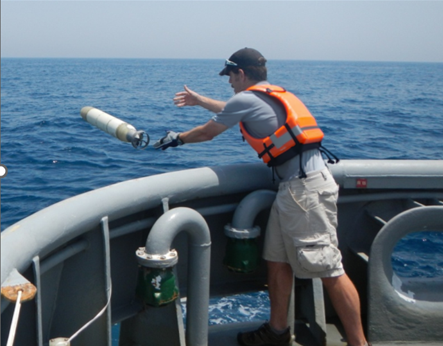
PRECISION ACOUSTICS. PROVEN AUTONOMY.
Ocean Acoustical Services + Instrumentation Systems (OASIS)
With a team of dedicated scientists and specialized support staff, OASIS delivers mission-critical, cutting-edge research and consulting services to the U.S. Department of War, commercial partners, and internal ThayerMahan programs. Their work underpins the world’s most advanced unmanned acoustic sensing systems, ensuring our solutions are backed by uniquely rigorous science and proven performance.
Real-World Solutions
SCIENTIFIC RESEARCH & CONSULTING
- Ocean acoustics, structures and vibration, and physical oceanography
- Calibrated acoustic measurements and modeling (e.g., NSPE-based Transmission Loss modeling)
- Long-term support to ONR programs such as PLUS-INP, LUSTER, AUMA, ASP, and PROSPER
TECHNOLOGY DEVELOPMENT & DEMONSTRATION
- Design and deployment of autonomous acoustic sensing systems
- Integration of low-power, high-performance DSPs into unmanned platforms (e.g., Slocum G3, Mk18 UUVs)
- Field demonstrations of reactive threat avoidance and distributed sensor processing
ADVANCED SIGNAL PROCESSING & AI/ML INTEGRATION
- Real-time beamforming, detection, classification, and probabilistic performance prediction
- Leadership in applying AI/ML to acoustic classification and sensor autonomy
CALIBRATED SOURCE OPERATIONS
- Deployment of calibrated acoustic sources (e.g., USRD J-9, J-13, ITC HF Source)
Ports, Harbors, & Waterways
Port & Fairway Monitoring, Layered Harbor Defense, Offshore Infrastructure Protection
Learn moreBorders & EEZ
IUU Fishing Detection, Illicit Drug & People Trafficking, Transit-Routes
Learn moreDeep Water
Surface & Undersea Surveillance, Layered Defense & Early Warning
Learn moreWhy Use Arrays Instead of a Single Hydrophone?
A single hydrophone can detect underwater sounds, but it is much like listening with only one ear. While it can hear activity, determining exactly where a sound is coming from can be difficult, especially in noisy ocean environments.
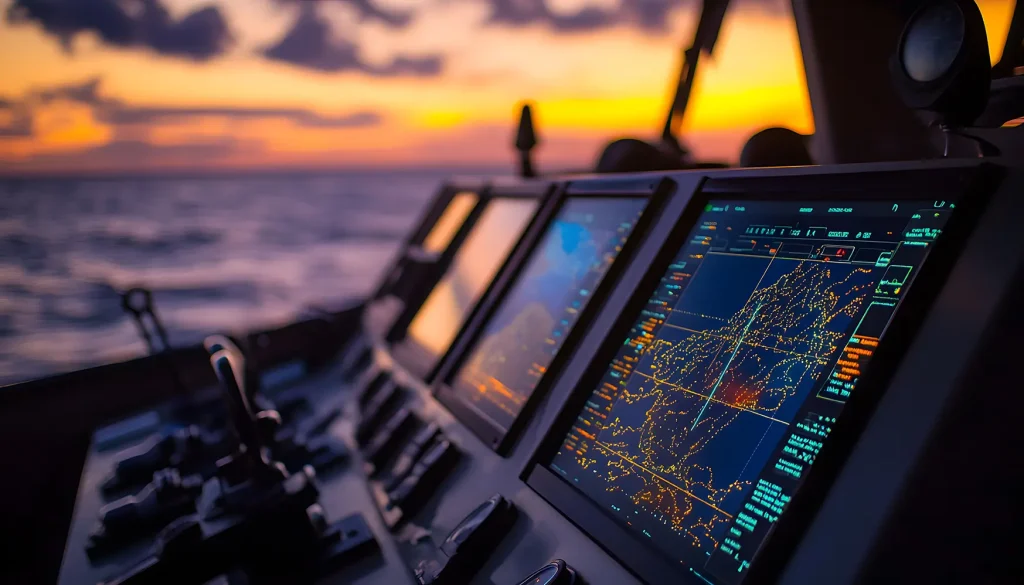
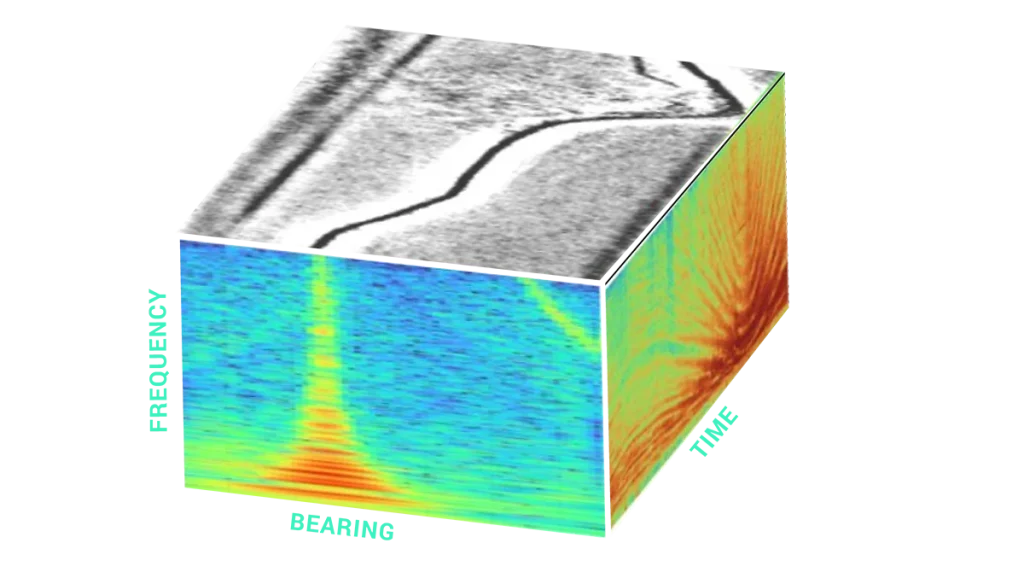
The state-of-the-art linear acoustic arrays that we manufacture use multiple specialized underwater microphones (hydrophones) working together. Through a process called beamforming, we compare signals across hydrophones to enhance sounds from specific directions while suppressing unwanted noise.
The result is a significant improvement in performance:

Noise Rejection
Reduces interference from ships, weather, and other environmental sounds.

Directional Awareness
Determines where sounds originate, helping our customers detect, track, and monitor points of contact.
Improved Detection
Identifies signals that may be difficult or impossible for a single hydrophone to distinguish from background noise.
LISTENING TO THE OCEAN
ARRAY BEAMFORMING FOR MARINE MONITORING
Think of an acoustic array as a team of highly coordinated underwater listeners. While a single hydrophone can hear sounds, an array can both hear and determine where those sounds are coming from. By combining information from multiple hydrophones, beamforming enables us to focus on important acoustic signals while filtering out distractions – much like how human hearing helps us focus on one voice in a crowded room.
FAQ
ask our experts

Dr. Vince Premus
President of OASIS, Chief Science Officer
What is ocean Acoustics?
Ocean acoustics is the study of how sound travels through seawater. Because sound moves more efficiently underwater than light or radio waves, it is one of the most effective ways to detect, understand, and monitor what is happening in the ocean.
What is passive acoustic sensing?
Passive acoustic sensing involves listening to sounds already present in the ocean, rather than emitting signals. This method enables detection and classification of vessels, marine life, and environmental activity without revealing the listener’s location.
How does ocean acoustics help detect objects underwater?
Acoustic systems analyze sound patterns, including frequency, amplitude, and direction. Advanced processing – like beamforming and classification – allows scientists to identify and track objects based on their acoustic signatures.
What role does physical oceanography play in acoustics?
Physical oceanography studies ocean conditions such as temperature, currents, and salinity – all of which influence how sound propagates. Understanding these variables helps improve the accuracy of acoustic sensing systems.
What makes OASIS’s work unique?
- Over 35 years supporting leading organizations like ONR, NUWC, and NAVSEA
- Pioneers in autonomous, real-time passive acoustic sensing
- Deep integration of research into deployable systems and platforms
- Proven ability to translate complex science into operational advantage